100 Years of UPSC: A Century of Merit and Inclusivity
The Union Public Service Commission (UPSC) marks 100 years of its establishment on October 1, 2026, evolving from an advisory body into an independent constitutional authority.
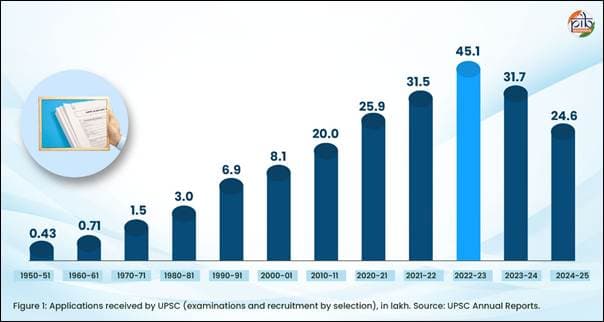
The Union Public Service Commission (UPSC) will complete one hundred years of its establishment on October 1, 2026. The institution's journey began on October 1, 1926, when India's first Public Service Commission was formed as an advisory body. At that time, the Chairman and members were appointed by the Secretary of State in London. Over a century of evolution, the institution has now established itself as an independent constitutional body.
Prior to the foundation of the Commission, the principle of 'merit' instead of 'recommendation' for government jobs was formally implemented in 1855. However, in the early stages, the Indian Civil Service (ICS) examination was conducted only in London and in the English language, making it difficult for Indians to participate. In 1863, Satyendranath Tagore became the first Indian to join this service. Later, as a result of nationalist demands and the Montagu-Chelmsford reforms, provisions for a Public Service Commission were made under the 'Government of India Act, 1919'.
In the Constituent Assembly, Dr. B.R. Ambedkar introduced the draft articles relating to the Union and State Public Service Commissions, which became Part XIV (Articles 315-323) of the Constitution. Dr. Rajendra Prasad emphasized that the independence of these commissions was mandatory to ensure fairness in government appointments and to prevent nepotism. Currently, under Article 316, the Chairman and members are appointed by the President.
The Commission primarily conducts competitive examinations such as the Civil Services, Indian Forest Service, Engineering Services, and Combined Medical Services. Additionally, it advises the government on recruitment rules, Departmental Promotion Committees, and disciplinary matters. According to 2023-24 data, the Commission took action on the records of 24,581 officers for promotion and inducted 532 officers into the All India Services.
On the technical front, UPSC has undergone extensive changes. The journey, which began with the use of computers in 1978, has now reached AI-based facial authentication, which was implemented in the Civil Services (Preliminary) Examination on May 24, 2026. The Commission has also launched initiatives like 'Pratibha Setu', which connects candidates who narrowly miss the final list with verified employers.
Progress has also been made in the area of inclusivity. The share of women in the Civil Services Examination was 3.6 percent in 1952, which increased to 31.2 percent in 2025. Alongside this, steps such as providing scribe facilities for candidates with disabilities, the inclusion of the EWS category, and a separate category for transgender candidates have been taken.
The Commission is currently led by Chairman Dr. Ajay Kumar, along with eight members, including three women. According to Dr. Ajay Kumar, the reason for the institution's continuity is not resisting change, but knowing what should never change.