India Transforms Lighthouses into Major Landmarks through Tourism and Modern Technology
India is developing its historical lighthouses as tourism centers and museums alongside navigation, boosting local employment opportunities.
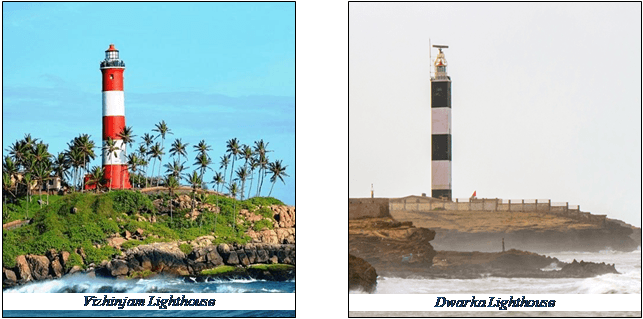
India is presenting its maritime heritage through a new lens across its coastline of over 11,000 kilometers and its 205 lighthouses. These lighthouses are no longer serving merely as beacons to guide ships, but are being developed as tourism and cultural hubs. As a result of this initiative, the number of tourists visiting lighthouses has increased from approximately 4 lakh in 2014 to 18.63 lakh in 2024-25.
Across the country, 75 lighthouses have been developed as tourist destinations due to their historical and architectural significance. These include the Mandvi and Dwarka lighthouses in Gujarat, Tadri in Karnataka, Pamban in Tamil Nadu, and Vizhinjam in Kerala. To facilitate tourists, the Directorate General of Lighthouses and Lightships (DGLL) has launched a digital ticketing portal. This transformation has created new employment opportunities for local hotels, restaurants, transport services, and artisans.
Technologically, all of India's lighthouses are now solar-powered. At stations such as Samyani Island and Jodia in Gujarat, oil lamps have been replaced by modern LED lanterns and electronic flashers. To enhance safety, 87 Automatic Identification System (AIS) shore stations have been established, which aid in the safe navigation of ships via data broadcast systems in accordance with SOLAS regulations.
To preserve maritime history, lighthouse museums have been established in Chennai, Mahabalipuram, Alappuzha, Kannur, Muttom, Dwarka, and Gopnath. The Mahabalipuram lighthouse, linked to the maritime trade of the Pallava kings, is now a confluence of living heritage and modern LED technology. Additionally, the National Maritime Heritage Complex (NMHC) is being constructed in Lothal, Gujarat, at an estimated cost of ₹266.11 crore, which will include one of the world's tallest lighthouse museums, standing at 77 meters. A new lighthouse museum is also planned for Visakhapatnam, for which 3,156 square meters of land have been allocated.
To promote maritime heritage, the 'Indian Lighthouse Festival' has been initiated. The first edition was held in 2023 at Fort Aguada in Goa, the second in 2024 in Puri, and the third in 2026 in Visakhapatnam. These events have connected communities through sand art, folk dance, music, and coastal cuisine.
Under future plans, there is a proposal to develop 25 more lighthouses as tourism destinations. Simultaneously, four new lighthouses are being constructed along the Brahmaputra River at Pandu, Bogibeel, Silghat, and Biswanath Ghat at an estimated cost of approximately ₹84 crore. This will be India's first lighthouse infrastructure on inland waterways. Along with navigation, facilities such as museums, amphitheaters, and cafeterias will also be developed at these sites.