India's Digital Revolution: Additive Manufacturing to Transform the Future of Production
Through the National Strategy for Additive Manufacturing (NSAM), the Indian government is preparing to become globally competitive in 3D printing technology.
India is rapidly advancing toward digital manufacturing through Additive Manufacturing (AM), commonly known as 3D printing technology. In this process, manufacturing is controlled by a digital file, allowing digital designs to be converted into physical objects. The Ministry of Electronics and Information Technology (MeitY) launched the 'National Strategy for Additive Manufacturing' (NSAM) in February 2022, with the goal of developing a robust AM ecosystem in India.
Under this strategy, more than 154,000 individuals have been trained so far, and support has been provided to 56 AM start-ups. NSAM aims to capture a 5 percent share of the global additive manufacturing market and add approximately 1 billion US dollars to India's Gross Domestic Product (GDP). Additionally, the government targets the promotion of 100 new start-ups, the development of 500 new products, and the training of 100,000 skilled workers.
The impact of additive manufacturing is evident across several of India's strategic sectors. In the space sector, 'Agnikul Cosmos', a start-up from IIT Madras, launched 'Agnibaan-SOrTeD' in May 2024 featuring an AM-printed semi-cryogenic rocket engine. In the defense sector, the Indian Army constructed its first two-story residential unit in Ahmedabad, which was completed in just 12 weeks. In healthcare, start-ups like OsteoForge, in collaboration with MeitY and the Technology Development Board, are developing 3D-printed bone implants using natural silk and bio-ceramic materials.
Positive results have also emerged in the construction sector. The 'Kelvin 6K Pro' 3D printer demonstrated its capability by building a 2,500-square-foot house in less than 30 days using low-carbon geopolymer materials. This technology can reduce costs by 30 percent and emissions by up to 90 percent compared to cement-based construction.
The government is now transitioning this strategy into the 'NSAM 2.0' phase. This new phase will focus on accelerating the creation of Intellectual Property Rights (IPR), expanding the AM network, and commercializing technologies that are competitive on a global scale. Simultaneously, students are receiving practical experience with 3D printing at the school level through Atal Tinkering Labs (ATL), with each lab receiving a grant of 2 million rupees.
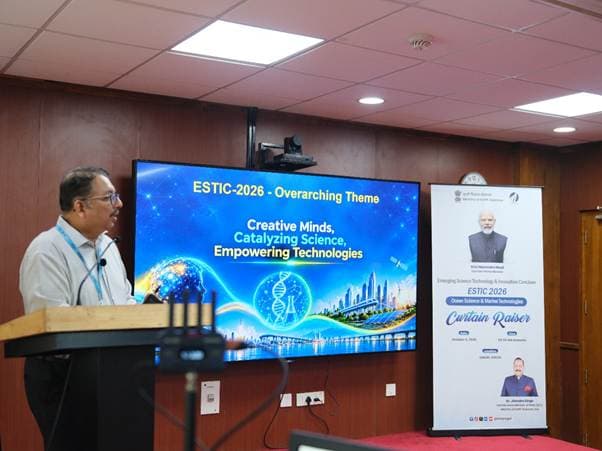
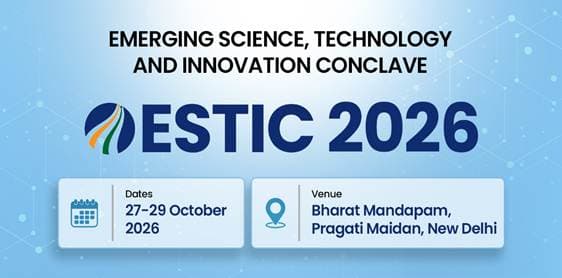
The second edition of the Emerging Science, Technology, and Innovation Conference (ESTIC)-2026 will be held from October 27–29, 2026, at Bharat Mandapam in New Delhi. Organized by the Council of Scientific and Industrial Research (CSIR), this event will discuss transformative technologies, including additive manufacturing, to support the vision of 'Viksit Bharat 2047'.