Light-Touch Regulation Essential for Developed India 2047: NITI Aayog Member Rajiv Gauba
Addressing the 5th Kautilya Economic Conclave, NITI Aayog member Rajiv Gauba called for the adoption of risk-based regulation and a less intrusive regulatory framework.
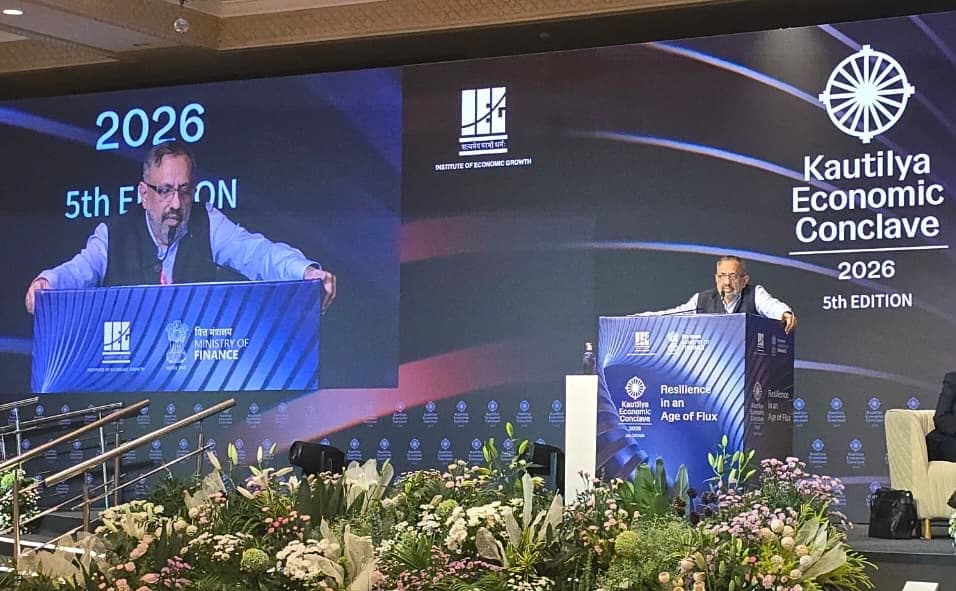
NITI Aayog member Mr. Rajiv Gauba addressed a session titled "Regulatory Oversight in an Era of Change" during the 5th Kautilya Economic Conclave. During the session, he stated that it is imperative for regulatory frameworks to evolve alongside the rapidly changing geopolitical, technological, and economic environment.
Mr. Gauba emphasized that the primary challenge facing policymakers is not choosing between regulation and development, but rather crafting rules that promote innovation, investment, and competition while controlling risks. He noted that geopolitical uncertainty, disruptions in global supply chains, and the increasing use of tariffs and export controls as strategic tools are transforming the economic landscape. Additionally, he observed that technological advancements in fields such as Artificial Intelligence, cybersecurity, and digital technology are occurring at a pace far exceeding the adaptability of existing regulatory frameworks.
Discussing the complexity of modern business models, he stated that as traditional boundaries between industries blur, regulatory frameworks must evolve to address interconnected risks without creating contradictory obligations. He clarified that while regulation is necessary for security, consumer protection, and market stability, excessive or flawed rules can hinder investment and innovation.
According to Mr. Gauba, the country's competitiveness depends not only on infrastructure or labor laws but also on the clarity, consistency, and predictability of the regulatory environment. He suggested that regulatory requirements should be determined based on the nature of the risks involved and their potential outcomes. He advised regulators to examine whether new rules are truly necessary before intervening in new sectors and to avoid trying to find pre-emptive solutions for every possible failure.
Regarding regulatory independence and accountability, he stated that regulators need autonomy to make difficult decisions, while public trust depends on transparent processes and effective review mechanisms. He stressed the importance of strengthening analytical capabilities, attracting expert talent, and developing engagements with academia and technological institutions for regulatory capacity building.
In conclusion, he stated that the goal should be a system that is strict in high-risk areas and less intrusive in low-risk areas. He highlighted the need for a decisive shift toward 'light-touch regulation' to achieve the goal of a Developed India by 2047, aligning with Prime Minister Modi's vision of 'governance based on trust' or 'Jan Vishwas'.