NRIDA and IIM Calcutta Sign MoU to Study Impact of Rural Roads
NRIDA and IIM Calcutta have signed a Memorandum of Understanding for a four-year study to assess the socio-economic impacts of roads constructed under PMGSY-IV and PM-JANMAN.
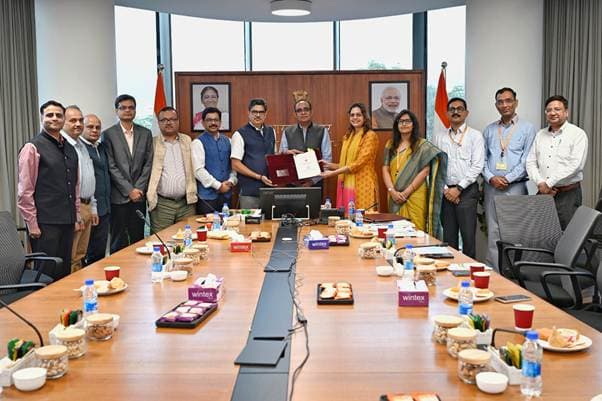
The National Rural Infrastructure Development Agency (NRIDA) of the Ministry of Rural Development, Government of India, and the Indian Institute of Management (IIM) Calcutta have signed a Memorandum of Understanding (MoU). The agreement aims to assess the long-term 'longitudinal' impact of roads developed under the PMGSY-IV and PM-JANMAN schemes.
The MoU was signed by Ms. Aditi Singh (IAS), Director General of NRIDA, and Prof. Alok Kumar Rai, Director of IIM Calcutta, in the presence of Mr. Rohit Kansal, Secretary of the Ministry of Rural Development, and other officials. The primary goal of this initiative is to strengthen the evidence-based impact assessment of works related to rural connectivity.
The study will span four years and cover 250 roads across 150 blocks and 50 districts in 10 states and Union Territories, including Andhra Pradesh, Assam, Chhattisgarh, Jammu and Kashmir, Jharkhand, Madhya Pradesh, Odisha, Rajasthan, Sikkim, and Uttarakhand. Approximately 5,000 households will be surveyed to evaluate changes in mobility, accessibility, and socio-economic conditions.
The study process is divided into three phases: a baseline survey (pre-construction) lasting 14 months, a transition period of approximately 12 months, and an endline survey (post-construction) lasting 22 months.
The results of the study are expected to clarify the impact of improved rural road connectivity on livelihoods, employment, income sources, agricultural activities, and market access. Additionally, it will examine the long-term effects on education, healthcare, women's empowerment, security, and access to essential public and financial services.
Specifically, the study will focus on aspects such as the reduction in travel time and transportation costs, the increase in employment opportunities, and the reduction in dependence on migration. Through this process, gaps in the implementation of rural road connectivity and emerging challenges will be identified, which will assist in future policy interventions and better planning for rural road projects.