Semicon India 2026 Concludes: Showcasing India's Growing Strength in Global Semiconductor Ecosystem
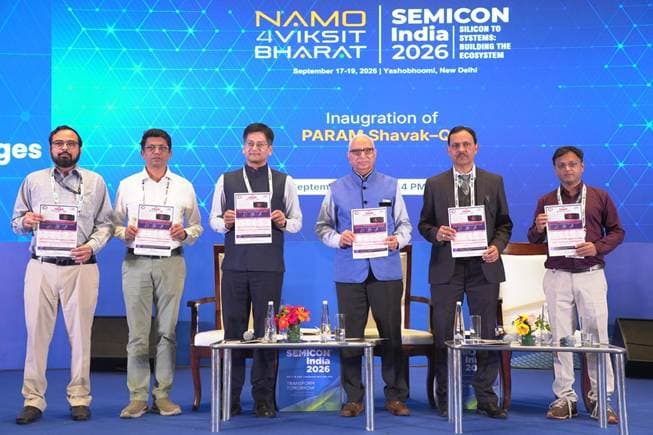
The fifth edition of Semicon India 2026 concluded at Yashobhoomi, New Delhi, featuring representatives from 52 countries and over 600 exhibitors.

The fifth edition of the semiconductor conference 'Semicon India 2026' was successfully concluded at Yashobhoomi, New Delhi, under the theme 'Silicon to Systems: Building the Ecosystem.' Held from September 17 to 19, 2026, the three-day event saw a total of 51,656 registrations with approximately 40,000 attendees. The program featured participation from representatives of 52 countries, more than 150 speakers, and over 600 exhibitors, including nearly 300 international companies.
Various aspects of the semiconductor value chain were showcased through six country pavilions—including Japan, South Korea, Malaysia, Netherlands, Singapore, and Sweden—as well as 12 state pavilions, a startup pavilion, a workforce development zone, an innovation showcase, and a student hackathon. Prime Minister Narendra Modi inaugurated the conference and discussed India's progress ranging from policy discussions to commercial production. He also virtually inaugurated commercial production lines at CDIL Semiconductor in Mohali and Suchi Semicon in Surat.
The Prime Minister presented the framework for 'Semicon 2.0', which has a total outlay of 1,27,500 crore rupees. This initiative is based on six pillars: design, machinery and materials, new fabs, advanced packaging, research, and talent development. Additionally, five commercial units have now become operational out of the 12 projects approved under 'Semicon 1.0'.
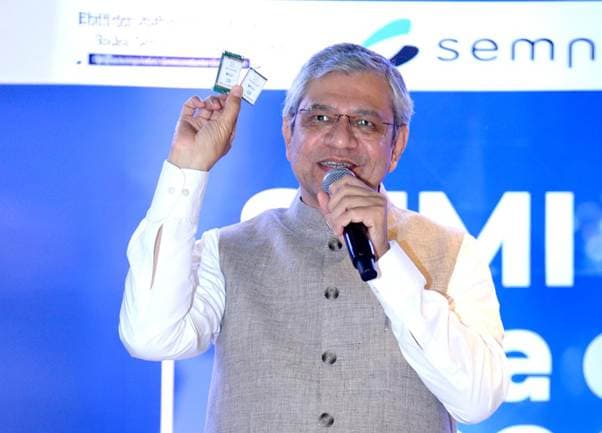
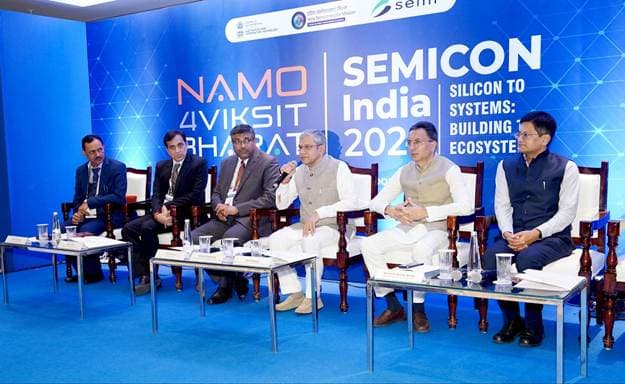
During the three-day event, 56 MOUs, announcements, and strategic initiatives were worked upon to foster cooperation in fields such as semiconductor design, fabrication, advanced packaging, Artificial Intelligence (AI), High-Performance Computing (HPC), Research and Development (R&D), and skill development. Ashwini Vaishnaw, Minister for Electronics and Information Technology, Railways, and Information and Broadcasting, outlined the implementation approach for 'Semicon 2.0', emphasizing themes such as resilient supply chains and the participation of women in semiconductor manufacturing.
The concluding day focused on technical capacity, sustainability, and deep-tech startups. A Leadership Forum, led by Amitesh Kumar Sinha, CEO of the India Semiconductor Mission and Additional Secretary of MeitY, emphasized the 'Silicon to Systems' approach. Meanwhile, Sushil Pal, Joint Secretary of MeitY, led discussions on investment facilitation and ease of doing business.
To promote innovation, the 'Digital India RISC-V Grand Challenge' was organized under the 'Chips to Startup Program', featuring 5,045 participants from 1,236 teams. Alongside this, more than 3,800 teams from over 900 colleges registered for three hackathons organized by CE NSE-II SC, KLA, Synopsys, and Lam Research. Winners were awarded cash prizes, internships, and software tools.