Semicon India 2026: India Emerging as Global Partner in Semiconductor Manufacturing and Design with Focus on ISM 2.0
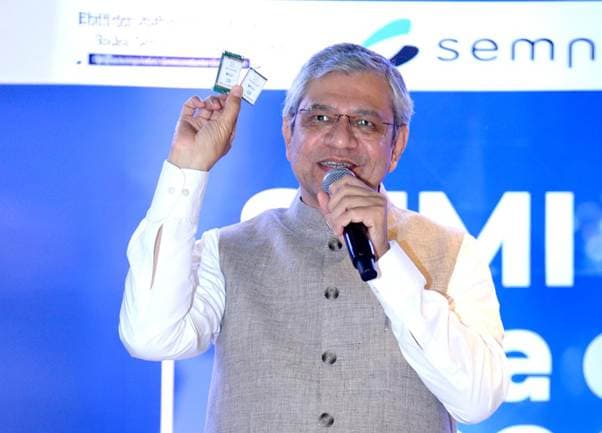
On the second day of Semicon India 2026 in New Delhi, Union Minister Ashwini Vaishnaw shared a vision to transform India into a 'product nation' and strengthen its position in the global semiconductor supply chain through ISM 2.0.
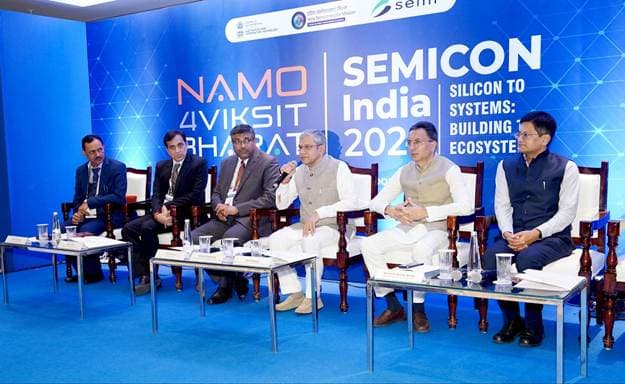
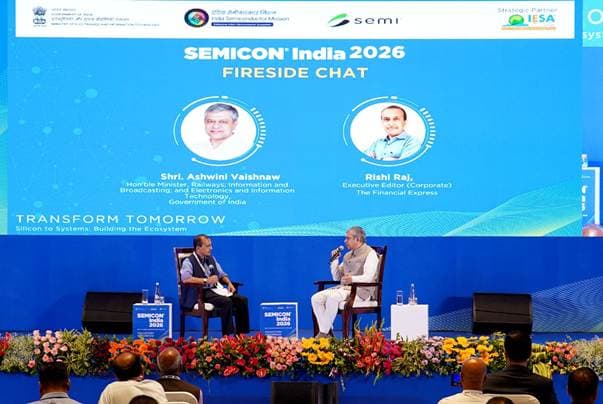
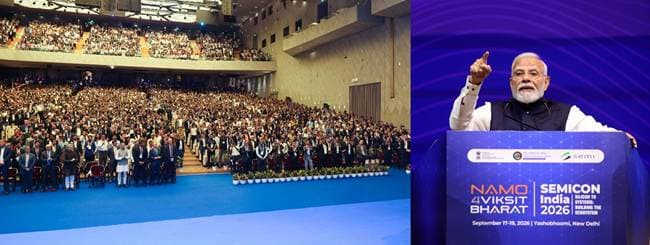
The second day of 'Semicon India 2026,' held at Yashobhoomi in New Delhi, saw policymakers, global semiconductor giants, researchers, startups, and students discussing critical topics such as manufacturing, supply chain, chip design, and cutting-edge packaging. The primary objective of the event is to develop India into an integrated and globally competitive 'silicon to systems' ecosystem.
Union Minister for Electronics and Information Technology, Shri Ashwini Vaishnaw, stated that the India Semiconductor Mission (ISM) has now moved beyond intent and entered a phase of large-scale implementation. He noted that ISM 1.0 achieved its six-year targets in just four years. Now, through ISM 2.0, the focus will be on six key pillars: design, machinery, materials, the establishment of more fabs, strengthening the ATMP/OSAT industry, research and development (R&D), and talent development.
Emphasizing design capabilities, the Minister estimated that at least 200 chip design companies would emerge under ISM 2.0. He informed that over 105 chip design startups have received state-of-the-art Electronic Design Automation (EDA) tools, and 20 startups have secured venture capital funding. On the training front, approximately 70,000 chip-design engineers have been trained so far against a target of 85,000. Additionally, five out of the 12 plants approved under ISM 1.0 have commenced commercial production.
The second day of the event witnessed the announcement of 25 Memorandums of Understanding (MoUs) and strategic collaborations between Indian and global partners. These agreements covered areas such as indigenous silicon carbide power technology, deep-tech investment, and workforce development. Foreign Secretary Shri Vikram Misri emphasized the need for trusted global partnerships combined with domestic capabilities to achieve self-reliance.
Various sessions featured discussions on the use of Artificial Intelligence (AI) and technical shifts such as 3D ICs and chiplets. Ms. Nivriti Rai, MD and CEO of Invest India, identified memory, High Bandwidth Memory (HBM), and advanced packaging as significant opportunities for India. Furthermore, the infrastructural initiatives of states like Assam, Odisha, Gujarat, and Karnataka, as well as the increasing participation of women in the manufacturing sector, were highlighted.
To foster international cooperation, separate country roundtables were organized with Singapore, Europe, and South Korea. These meetings focused on investment, localization of the supply chain, and technology partnerships. Approximately 16,000 people participated in the second day of Semicon India 2026, reflecting India's growing stature in the global semiconductor ecosystem.