Tampering with IMEI Numbers Poses Major Digital Security Threat, Strict Action Under Telecommunication Act 2023
The government has identified the tampering of mobile IMEI numbers as a threat to digital sovereignty, with violations punishable by up to 3 years in prison and fines up to 50 lakh rupees.
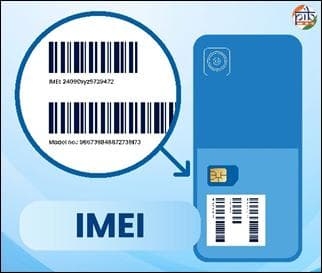
Telecommunications security has become a critical issue within India's rapidly expanding digital ecosystem. By July 2026, the number of active wireless mobile subscribers in the country reached 1,204.01 million. To ensure the security of this massive network, maintaining the integrity of International Mobile Equipment Identity (IMEI) numbers is essential. Tampering with or misusing IMEI numbers makes it difficult to identify devices on the telecommunications network, posing a significant challenge for law enforcement agencies and consumer safety.
It is illegal to intentionally remove, erase, or alter the IMEI number of any mobile device. Furthermore, the use, manufacture, smuggling, or control of hardware or software known to be configured for changing IMEI numbers is categorized as a criminal offense.
An IMEI is a unique 15-digit number that identifies a mobile device on the network. The first eight digits are the Type Allocation Code (TAC), which identifies the device model. The global allocation of TAC is managed by the Global System for Mobile Communications Association (GSMA). Consumers can view their IMEI number by dialing *#06# on their mobile. The authenticity of the number can be verified via the Sanchar Saathi portal, the mobile app, or by sending an SMS with 'KYM <15-digit IMEI number>' to 14422.
Manufacturers, importers, and sellers play a vital role in maintaining a secure ecosystem. Manufacturers and importers are required to register IMEI numbers through the Device Setu–Indian Counterfeited Device Restriction (ICDR) portal. Resellers and retailers must ensure they sell only devices with untampered IMEI numbers and should verify IMEIs from the government database by paying the prescribed fee when trading in old devices. Brand owners must ensure their products comply with IMEI registration and cybersecurity conditions.
The Department of Telecommunications (DoT) has cautioned citizens against using modems, SIM boxes, or other devices with tampered IMEIs. Additionally, obtaining SIM cards through fake documents, selling or transferring SIMs registered in one's name to others, and using apps or websites to alter Calling Line Identity (CLI) are risky and illegal activities.
Consumers are advised to purchase phones only from authorized sellers. In the event of a lost or stolen device, users should follow these steps: first, lodge a report with the local police; second, obtain a duplicate SIM from the operator; third, request to block the device by uploading the police report and ID proof on the Sanchar Saathi (CEIR) portal or app; and finally, notify the police and unblock the device via the portal once it is recovered.
The Telecommunication Act, 2023, includes strict provisions regarding the tampering of telecommunication identifiers such as IMEI. Under Sections 42(3)(c) and 42(3)(e) of the Act, tampering with identifiers and fraudulently obtaining SIMs or identifiers are prohibited. Violations can lead to imprisonment for up to three years, a fine of up to 50 lakh rupees, or both. According to Section 42(7), these offenses are cognizable and non-bailable. Furthermore, Section 42(6) provides for the same punishment for those who abet such crimes.