Increased Participation of Women and Transgender Community in Sanitation Drives Transforming Social Landscape
Across various Indian cities, women and the transgender community are turning sanitation services into professional identities and employment opportunities, reshaping waste management.
Sanitation in India is no longer just a government service; it has become a medium for dignity, entrepreneurship, and participation. The 'Swachhata Hi Seva 2026' campaign, launched on September 17, 2026, with the theme 'Participation in Sanitation, Clean India, Developed India,' is providing a national platform for this transformation. Under this campaign, women and the transgender community in various parts of the country have written new stories of social and economic change by taking leadership roles in waste management.
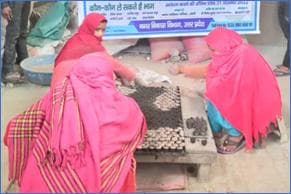
In the Krishna Vihar Colony of Loni, Uttar Pradesh, women have turned the challenge of cow dung into an opportunity. A group of women here produces incense sticks and loban cups from cow dung, providing employment to 40-50 women during the summer months. The Loni Municipal Council earns up to 25 percent from the sale of these products. These items are supplied to several cities, including Delhi, Mumbai, Punjab, Gujarat, and Hyderabad, and during the COVID-19 pandemic, orders reached as far as Mauritius and South Africa. Plans are now underway to produce fuel logs and compostable pots from cow dung.
In Patna, Bihar, the 'Pink Material Recovery Facility' (MRF) is primarily operated by women. This facility manages 2 tons of dry waste and 1.5 tons of wet waste daily. Launched with the support of the Patna Municipal Corporation (PMC), this initiative adopts a 'Cash for Waste' model, where citizens are paid for providing dry waste. Additionally, the principles of Reduce, Reuse, and Recycle (3R) have been implemented by converting old scrap vehicles into 'Mobile Pink Toilets.'
Similar community efforts have been observed in other states. In Bhopal, 250 women brand ambassadors have started 'Utensil Banks' across 25 wards to reduce the use of single-use plastics, while a 'Swachhata Kitty Group' consisting of 60 members has created a shared fund for community cleaning. In Uttarakhand, under the 'Baini Sena' (Army of Sisters), 570 women are monitoring cleaning activities and raising awareness in various wards. Meanwhile, in Shillong, women from the 'Innehskhem Self-Help Group' are earning a livelihood by producing compost from wet waste.
Odisha has set an example in inclusivity by placing the transgender community at the center of the urban sanitation system. In Cuttack and Bhubaneswar, transgender self-help groups have been entrusted with the operation and maintenance of Septage Treatment Plants (STP). In Bhubaneswar, a group named 'Sweekriti' is managing a 75-KLD Faecal Sludge Treatment Plant (FSTP). Furthermore, the Bhubaneswar Municipal Corporation has involved transgender groups in the operation of seven cesspool vehicles, providing drivers and helpers with the minimum applicable wage and necessary safety training.