India Aims for Global Number 1 in Silk Production, Target of 60,000 Metric Tonnes by 2030-31: Union Minister
Union Textiles Minister Giriraj Singh has pledged to propel India to the top global position in silk production by 2028-29.
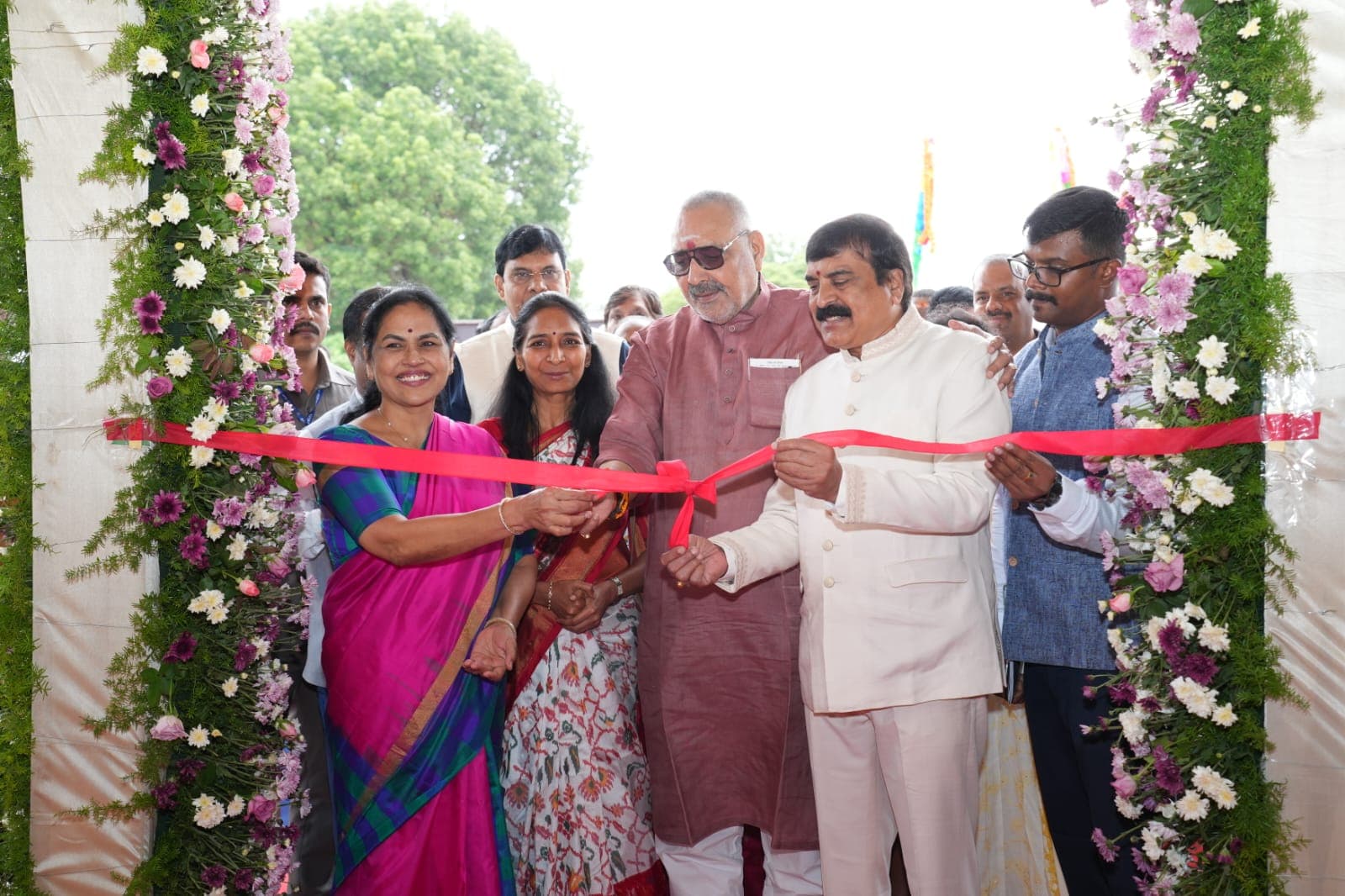
Union Textiles Minister Shri Giriraj Singh and Minister of State for Micro, Small and Medium Enterprises and Labour and Employment Ms. Shobha Karandlaje inaugurated the 77th Foundation Day of the Central Silk Board (CSB) and an exhibition of silk products and technologies at the UAS-GKVK auditorium in Bengaluru. The event was attended by Member of Parliament and CSB Board member Shri G. Lakshminarayana, Joint Secretary of the Ministry of Textiles Ms. Padmini Singla, and other dignitaries. Silk producers and weavers from Karnataka, Andhra Pradesh, Telangana, and Tamil Nadu also participated in the program.
Addressing the gathering, Union Textiles Minister Shri Giriraj Singh stated that the Central Government is committed to the expansion of the silk production sector and the economic progress of farmers. He noted that the country's silk production has increased from 26,000 metric tonnes in 2014 to 42,000 metric tonnes currently. The government has set a target to increase this to 60,000 metric tonnes by 2030-31 and has pledged to make India the global leader in silk production by 2028-29. The Minister expressed the aspiration to raise the annual income of farmers to between 10 lakh and 12 lakh rupees by increasing mulberry leaf yields and improving the silkworm rearing cycle.
Shri Giriraj Singh called for the organization of 'Best Silk Farmer' award competitions at the district, state, and national levels to foster competition among farmers. He emphasized that modern machinery, hybrid varieties, and new inventions by scientists must reach farmers directly. He mentioned that the decline in silk production in China is increasing the demand for Indian silk in the international market. Government priorities include strengthening the value chain, expanding the textile market to 300 billion dollars, and ensuring minimum economic security for weavers and workers.
Union Minister of State Ms. Shobha Karandlaje stated that Karnataka leads the country in total silk production. She mentioned that the government is focusing on infrastructure and industrial development to increase production in line with global export standards and reduce dependence on imports. She further noted that the government is supporting entrepreneurs who register under the MSME framework through grants and quality improvement schemes.
Ms. Padmini Singla, Joint Secretary (Silk) of the Ministry of Textiles, provided information that high-yield hybrid silkworms and modern machinery are being utilized to achieve the target of 60,000 metric tonnes. Additionally, AI (Artificial Intelligence), GIS (Geographic Information System), and machine learning technologies are being integrated for production capacity and quality checks.
During the program, the Silk Board exchanged Memorandums of Understanding (MoUs) with various organizations, appointment letters were handed over to 28 scientists, and outstanding employees and stakeholders were honored with awards.