Major Step in Rail Safety: 'Kavach 4.0' System Launched for the First Time on South Central Railway
Indian Railways has upgraded the Kavach system from version 3.2 to 4.0 in the Hyderabad Division of the South Central Railway, ensuring safer and more precise rail operations.
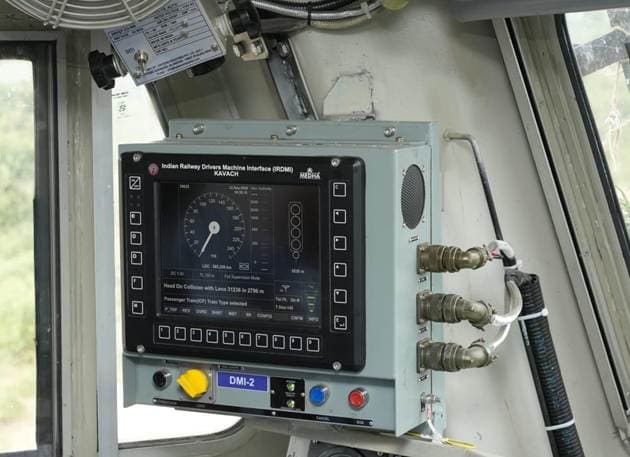
Indian Railways has achieved a significant milestone in the field of rail safety by successfully commencing the operation of 'Kavach' version 4.0 for the first time on the South Central Railway (SCR). This upgrade has been completed across 108 route kilometers of the Malkajgiri-Kamareddy section of the Hyderabad Division, where version 3.2 of Kavach was previously operational.
According to the Ministry of Railways, the latest version 4.0 was developed by utilizing experiences gained from the operation of version 3.2 across 1,465 kilometers of route on the South Central Railway. This system provides enhanced safety, advanced technology, and higher reliability. Indian Railways plans to implement this system on a broader scale.
Several critical technical improvements have been made in Kavach 4.0, including an increase in location accuracy, which enables a more precise determination of train positions. Additionally, improved signal-related information in large yards will increase situational awareness. For system integration, a station-to-station interface via Optical Fiber Cable (OFC) and a direct interface with the current electronic interlocking system have now been provided.
Kavach is an indigenously developed Automatic Train Protection (ATP) system. It assists the loco pilot in keeping the train's speed within the prescribed limits and can automatically apply brakes in the event of a failure. It is primarily designed to prevent Signal Passing at Danger (SPAD), control speed in critical situations, and reduce the risk of collisions. The system ensures safe operation even in poor weather conditions and meets the highest safety certification standards, known as 'Safety Integrity Level-4' (SIL-4).
The implementation of this system requires extensive infrastructure across railway sections, including 'Station Kavach' at stations and block sections, RFID tags on tracks, the installation of telecommunication towers, the laying of optical fiber cables, and 'Loco Kavach' on engines.