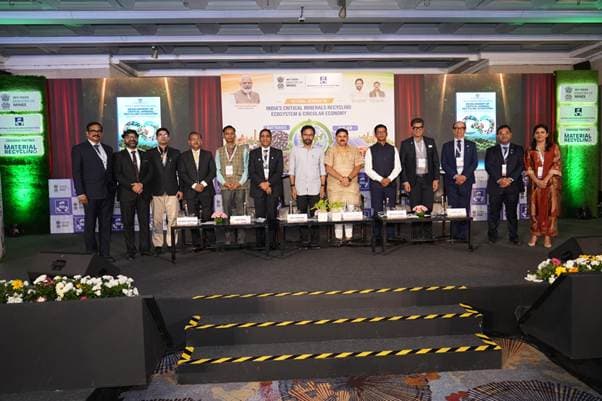
Union Minister Bhupender Yadav Inaugurates WWF Global Conservation Conference in Jaipur, Calls for Global Action on Wildlife Protection
Union Minister for Environment, Forest and Climate Change Bhupender Yadav emphasized community participation and coexistence while inaugurating the World Wide Fund for Nature (WWF) Global Conservation Conference in Jaipur.
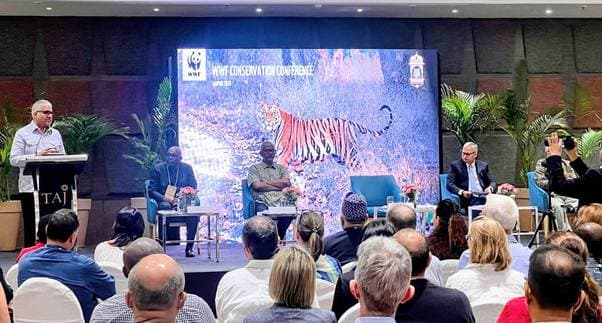
Union Minister for Environment, Forest and Climate Change, Mr. Bhupender Yadav, inaugurated the World Wide Fund for Nature (WWF) Global Conservation Conference in Jaipur. Addressing representatives from over one hundred countries, he emphasized the necessity of working globally for conservation and coexistence and urged the international community to unite.
The conference was attended by Mr. Ramesh Pandey, Additional Director General (Wildlife) of the Ministry of Environment, Forest and Climate Change; Mr. Arijit Banerjee, Head of Forest Force and Principal Chief Conservator of Forests for the Government of Rajasthan; Mr. Daudi Samba, Chief Conservation Officer of WWF-International; and Mr. Ravi Singh, Chief Executive Officer of WWF-India.
Sharing Prime Minister Narendra Modi's vision for wildlife conservation, Mr. Bhupender Yadav detailed the achievements of the past decade. He noted that during this period, the number of protected areas increased from approximately 750 to more than 1,000. Additionally, the number of tiger reserves rose from 47 to 58, elephant reserves increased from 30 to 33, and the number of Ramsar sites grew from 24 to 101. He also mentioned the successful reintroduction of cheetahs in India.
The Minister stated that India's commitment to species conservation is both constitutional and cultural. He clarified that the Indian Constitution establishes the protection of wildlife as a state directive and a duty of the citizen. India is also a party to CITES, CMS, CBD, and the Ramsar Convention. He added that the recovery of tigers, elephants, rhinoceroses, and Asiatic lions is the result of consistent political will.
Mr. Yadav highlighted the role of scientific research and monitoring mechanisms, stating that all-India population estimates for creatures such as tigers, elephants, dolphins, lions, and snow leopards have provided critical insights into habitat improvement and the protection of corridors. He praised the success of conservation breeding for the Great Indian Bustard (GIB) in Rajasthan and the community-led efforts through Oran sacred groves, which have helped prevent land degradation.
Furthermore, he stressed the need to conserve forests, wetlands, and grasslands. He provided information on ongoing programs for the conservation of the one-horned rhinoceros and the wild water buffalo, calling upon wildlife conservationists to implement effective measures.