Wastewater Management: Waste Water Transformed into Resource Under Swachh Bharat Mission-Urban
Through the Swachh Bharat Mission-Urban, used water is being treated and converted into a resource, promoting water conservation and a circular economy.
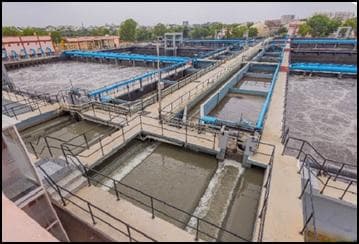
A new approach is being adopted for water management in rapidly growing cities, where wastewater from homes and factories is being viewed as a valuable resource rather than waste. Under the 'Swachh Bharat Mission-Urban' (SBM-U), special emphasis is being placed on 'Used Water Management' (UWM) to prevent untreated sewage from entering water bodies and to ensure the safe reuse of treated water.
Sewage Treatment Plants (STPs) are playing a central role in this campaign. The government has established guidelines for cities through 'Water Plus' certification to ensure that wastewater treatment meets prescribed standards. Additionally, the safe management of fecal sludge and septage is being assessed through the 'Open Defecation Free' (ODF) ++ protocol. Under SBM 2.0, projects worth 11,785 crore rupees have been approved for installing STPs in smaller towns, which will increase treatment capacity by 4,900 million liters per day (MLD).
Various cities across the country have presented successful models of wastewater management:
Jaipur: The Dehlawas STP here has a capacity of 215 MLD, the highest in Rajasthan. This plant is automated via a SCADA system and utilizes Sequencing Batch Reactor (SBR) technology. Treated water is being used for irrigation and industrial processes, while a portion is released into the Dryavati River.
Indore: Becoming the first city to receive 'Water+' certification, Indore no longer discharges dirty water into rivers or drains without treatment. The city has laid a pipe network of over 200 kilometers alongside centralized and decentralized STPs. Furthermore, more than 1.25 lakh rainwater harvesting units were installed within four months in 2022.
Surat: The Surat Municipal Corporation has established four tertiary treatment plants with a capacity of 116 MLD. Treated water is utilized for industrial operations, the rejuvenation of lakes, and agriculture. State-of-the-art robotic machines are used for the maintenance of the sewerage system.
Navi Mumbai: As the only five-star rated and 'Water+' certified city in Maharashtra, it has upgraded its sewage technology to cater to a population of 3 million. Over 30% of the treated water here is used for gardens and the cleaning of solid waste vehicles and transport buses.
Tirupati: Tirupati has developed a self-sustaining revenue model. It has an STP with a capacity of 50 MLD, of which 5 MLD of treated water is sold to Srikalahasti Pipes Limited, generating a net monthly income of 6 lakh rupees. Meanwhile, 18 MLD of water is provided to farmers free of charge.
These efforts have ensured that urban water management is no longer limited to pollution prevention; it is evolving into a circular system that provides water for irrigation, horticulture, and industry.