Department of Health and Family Welfare Launches 'Special Campaign 6' Focusing on Cleanliness and Administrative Reforms
The Department of Health and Family Welfare has decided to conduct Special Campaign 6 from October 2 to October 31, 2026, to strengthen citizen-centric governance and resolve pending cases.
The Department of Health and Family Welfare (DoHFW) of the Ministry of Health and Family Welfare has launched 'Special Campaign 6,' starting from October 2, 2026. The campaign will run until October 31, 2026, with the primary objectives of institutionalizing cleanliness, reducing the number of pending cases, and promoting efficient, citizen-centric governance.
Led by the Department of Administrative Reforms and Public Grievances (DARPG), the campaign aims to improve operational efficiency by promoting cleanliness and ensuring the timely disposal of pending matters. Under this initiative, the department has set comprehensive goals, including cleaning activities, the removal of old records and obsolete items, the review of files, the resolution of public grievances, and the simplification of rules and procedures.
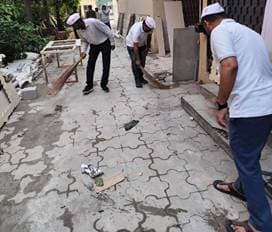
As part of the cleanliness initiative, 2,017 locations across various offices and institutions of the department have been identified for cleaning activities. Special emphasis is being placed on the removal of electronic waste (e-waste) and scrap items to free up office space and help generate revenue. Participating institutions in this campaign include the Office of the Assistant Drugs Controller (India) (CDSCO, JNPT C Port, Panvel), the Central Health Education Bureau (CHEB) in Delhi, the Post Graduate Institute of Medical Education and Research (PGIMER) in Chandigarh, and the International Institute for Population Sciences (IIPS) in Mumbai.
To strengthen administrative accountability, the department has selected several public grievances and appeals for expedited resolution. Additionally, to improve record management and reduce unnecessary documentation, 60,012 physical files and 10,020 e-files will be reviewed. Furthermore, 12 rules and procedures have been identified for simplification to enhance efficiency and facilitate smoother operations.