Major Transformation in India's Infrastructure: Bridges, Tunnels, and Expressways Drastically Reduce Travel Time
The construction of new bridges, tunnels, and modern rail services has significantly decreased travel time between various parts of the country, enhancing overall connectivity.
Rapid infrastructure development in India has led to extensive changes in travel times between cities and communities. New bridges, tunnels, expressways, and modern rail services have replaced long and difficult routes with direct and faster connections, saving time for millions of passengers.
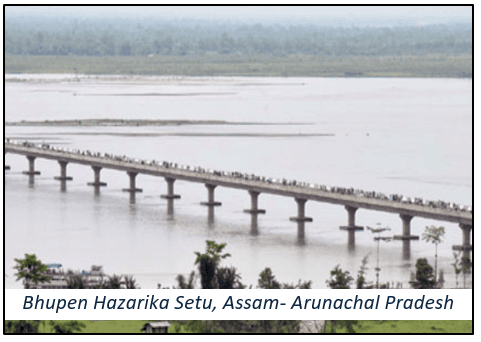
Time savings through bridges have been substantial across the country, with new constructions significantly reducing the hours previously required to cross rivers. For instance, the Bhupen Hazarika Setu (Dhola-Sadiya Bridge) between Assam and Arunachal Pradesh has reduced travel time from 6 hours to just 1 hour. Similarly, the Bogibeel Bridge has condensed a full day's journey between Dhemaji and Dibrugarh into a mere 1-2 hours. In Maharashtra, the Atal Setu (Mumbai Trans Harbour Link) has cut the travel time between Mumbai and Navi Mumbai to 20 minutes, while Bihar's Kosi Rail Mahasetu has transformed an 8-hour rail journey between Nirmali and Saraigarh into 30 minutes, reducing the distance from 300 km to 22 km.
The construction of tunnels in mountainous and challenging terrains has made travel safer and faster. In Himachal Pradesh, the 9.02 km long Atal Tunnel has reduced the distance between Manali and Sarchu by 46 km, saving 4-5 hours of travel. In Jammu and Kashmir, the Dr. Syama Prasad Mookerjee Tunnel has reduced travel time by approximately 2 hours, while the Banihal-Qazigund road tunnel saves about an hour and a half. Additionally, the Sela Tunnel, situated at an altitude of 13,000 feet in Arunachal Pradesh, ensures all-weather connectivity on the Tezpur-Tawang route.
Controlled-access expressways are increasing the speed of travel between cities. The Delhi-Meerut Expressway has reduced travel time from 2.5 hours to 50 minutes. Through the Bengaluru-Mysuru Expressway, a journey that previously took 3 hours is now completed in 75 minutes. The Delhi-Dehradun Economic Corridor, expected by April 2026, is estimated to reduce travel time from 6 hours to 2.5 hours. Meanwhile, the Mumbai-Nagpur Samruddhi Mahamarg has cut travel time from 16 hours to approximately 8 hours. The Delhi-Mumbai Expressway aims to reduce travel time from 33 hours to about 12 hours.
Railway modernization and high-speed corridors have also played a pivotal role. The railways have increased the speed of 549 trains in the 2026 timetable. New-generation trains like the Vande Bharat Express have further accelerated travel; for example, the New Delhi-Varanasi Vande Bharat is 40-50% faster than previous services. Furthermore, services such as Katra-Srinagar and Banaras-Khajuraho have led to significant reductions in travel time. The first Vande Bharat Sleeper train (Howrah-Guwahati) saves approximately 3 hours compared to the Saraighat Express.
Future plans include the Mumbai-Ahmedabad High-Speed Rail Corridor, which will reduce an 8-9 hour road journey to approximately 1 hour and 58 minutes. Additionally, the Central Budget 2026-27 announced seven other High-Speed Rail (HSR) corridors spanning approximately 4,000 km, with an estimated investment of ₹16 lakh crore.