Review of Constitutional Safeguards and Development Schemes for Scheduled Tribes Conducted in Karnataka
The National Commission for Scheduled Tribes (NCST) held a meeting in Bengaluru to review the implementation of welfare programs and constitutional rights for tribal communities in Karnataka.
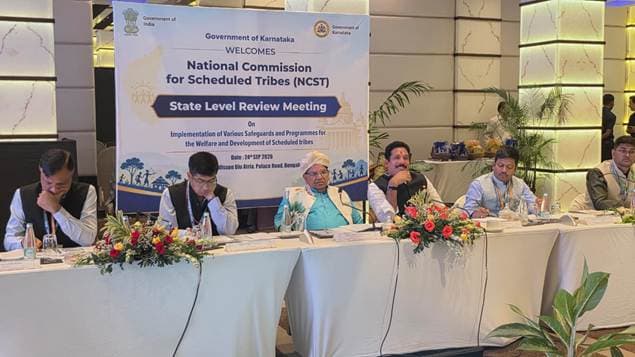
The National Commission for Scheduled Tribes (NCST) conducted a comprehensive review of the implementation of constitutional safeguards, welfare measures, and development programs for Scheduled Tribes in the state of Karnataka during a review meeting held at the Radisson Blu Convention Hall in Bengaluru. The meeting was chaired by Shri Antar Singh Arya, Chairperson of the NCST. Other attendees included Commission member Shri Jatothu Hussain, Joint Secretary Shri Amit Nirmal, and other senior officials. Representing the state government were the Chief Secretary, Director General (Police), Additional Chief Secretary, Principal Secretary, and secretaries from various departments.
The review process was based on a detailed questionnaire previously sent by the Commission, data provided by the Government of Karnataka, complaints and feedback received from tribal communities, and experiences from the Commission's previous regional visits. During the meeting, several critical issues were examined, including reservations, backlog vacancies, the utilization of funds under the Scheduled Tribe Component, and tribal land and forest rights.
The Commission expressed particular concern over the rejection of a large number of claims under the Forest Rights Act, 2006, and emphasized the need for a thorough investigation into pending and rejected claims. The meeting also involved discussions on a proposal to establish a special 'Karnataka State Scheduled Tribe Commission' for the continuous monitoring of constitutional safeguards. Additionally, measures to ensure effective representation of Scheduled Tribes in education and public employment, as well as strategies to fill backlog vacancies, were considered.
Special emphasis was placed on the socio-economic development of Particularly Vulnerable Tribal Groups (PVTGs), specifically the Koraga and Jenu Kuruba communities. The discussions prioritized their health, nutrition, housing, education, livelihood, land rights, and access to basic services. The NCST urged the relevant departments to take time-bound action on the issues raised and expressed its commitment to ensuring that constitutional and welfare measures yield effective results at the ground level.